

The following guide explores the top generative AI apps in 2024.
As an AI expert, I’ve seen firsthand how these generative AI applications are transforming industries and empowering individuals.
This explores the most popular generative AI apps based on a recent report from Andreessen Horowitz and my personal experience in the field.
Key Takeaways
- ChatGPT remains the top generative AI web product, followed by Character AI and Perplexity
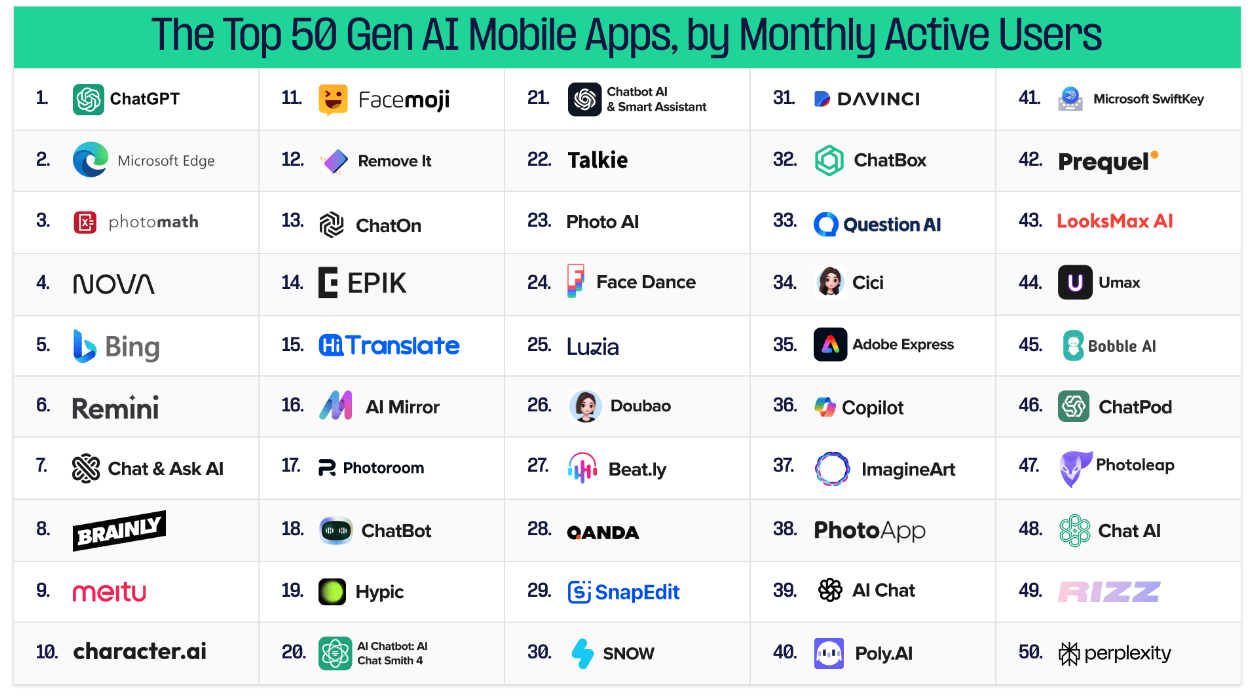
- Mobile AI apps are gaining traction, with ChatGPT, Microsoft Edge, and Character AI leading the pack
- Many popular AI tools are white-labeled versions of existing technologies, highlighting the importance of understanding the underlying capabilities
Top Generative AI Apps – The Andreessen Horowitz Report
Recently, venture capital firm Andreessen Horowitz published a report highlighting the top 50 generative AI web products and mobile apps.
This report offers valuable insights into the current state of AI adoption and popularity.

Top Web-Based AI Products
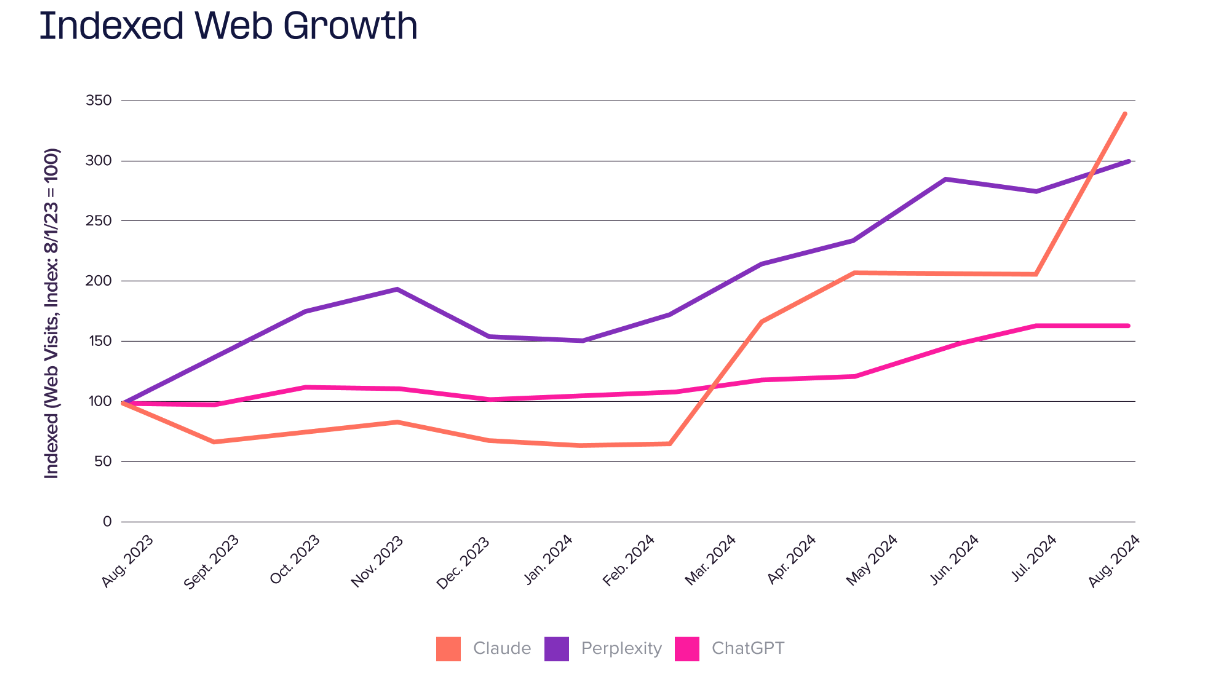
- ChatGPT
- Character AI
- Perplexity
- Claude
- Hugging Face
It’s worth noting that some lesser-known tools like Character AI have gained significant traction, surpassing established players in the AI space.
Leading Mobile AI Apps
- ChatGPT
- Microsoft Edge
- Character AI
The mobile landscape shows a mix of established tech giants and AI-focused startups vying for user attention.
My Favorite Generative AI Apps
As someone deeply immersed in the AI world, I have firsthand experience with many of these tools. Here are some of my top picks and why I find them valuable:
ChatGPT
ChatGPT remains my go-to tool for various tasks. With a ChatGPT Plus subscription, I can:
- Generate ideas and content
- Create custom GPTs tailored to specific needs
- Access higher usage limits
- Generate images using DALL-E 3
The versatility and continuous improvements make ChatGPT an indispensable asset for both personal and professional use.
Claude
Claude, developed by Anthropic, is another powerful AI assistant that I use regularly. Some key features include:
- A teams plan for collaborative work
- Custom projects for organized knowledge management
- More empathetic and human-like responses compared to some competitors
I find Claude Pro useful for tasks requiring a nuanced understanding of context and tone.
Perplexity
While I don’t use Perplexity daily, it’s an excellent tool for research purposes. Its key strengths include:
- Delivering concise, real-time answers
- Citing sources for improved credibility
- Offering an unbiased alternative to traditional search engines
As search technology evolves, tools like Perplexity are becoming increasingly valuable for those seeking accurate, up-to-date information.
Suno AI
For AI audio creation, Suno AI stands out. I’ve used it to generate intros and outros for my podcast, “Marketing Quacks.”
The ability to create custom audio content quickly makes Suno a game-changer for content creators.
Hugging Chat
Hugging Chat, part of the Hugging Face ecosystem, offers access to various AI models in one interface. This tool is particularly useful for:
- Experimenting with different AI models
- Accessing models that may be difficult to use elsewhere
- Staying up-to-date with the latest advancements in AI language models
Leonardo AI and Ideogram
For those interested in AI image generation, both Leonardo AI and Ideogram offer powerful capabilities:
- Leonardo AI provides a free platform for creating AI-generated images
- Ideogram recently updated to version 2.0, enhancing its features and output quality
These tools are excellent for designers, marketers, and anyone looking to create unique visual content.
Wrapping Up – Navigating the AI Landscape
The world of generative AI is vast and constantly evolving. While tools like ChatGPT and Claude lead the pack, niche applications for audio, image generation, and entertainment are carving out their own spaces in the market.
As we continue to explore and utilize these AI tools, it’s crucial to stay informed about their capabilities, limitations, and potential impacts on various industries.
By understanding the landscape of generative AI apps, we can harness their power to enhance productivity, creativity, and innovation in our personal and professional lives.
FAQs
What is the most popular generative AI tool in 2024?
According to the Andreessen Horowitz report, ChatGPT remains the most popular generative AI web product, followed by Character AI and Perplexity.
Are there any free AI tools worth using?
Yes, several free AI tools offer valuable features. Hugging Chat provides access to various AI models at no cost, while Leonardo AI and Ideogram offer free tiers for AI image generation.
How can businesses benefit from using generative AI tools?
Businesses can leverage generative AI tools for various purposes, including content creation, customer service automation, data analysis, and product development. Tools like ChatGPT and Claude can enhance productivity and decision-making processes across multiple departments.
Is it necessary to use multiple AI tools, or is one enough?
While a single AI tool can be useful, using multiple tools often provides a more comprehensive approach to problem-solving. Different AI tools excel in various areas, so combining their strengths can lead to better results and a more versatile AI toolkit.


